
Good Morning!
Tencent's Hy4 flash, launched two days ago, held 40.6% of all text-model usage yesterday. The day before, its share was 6.2%.
That puts it well ahead of DeepSeek V4.1 Flash, the long-time No. 1, whose share fell from 37.5% to 23.6% without losing any volume. The market simply grew around it: total usage rose from 30 trillion to 52 trillion tokens in a day, almost all of it Hy4 flash.
Our guess: Tencent has started routing traffic from WorkBuddy, its own agent product, through the model. That is unconfirmed. We're watching whether it holds.
Model | tokens | WoW (11/10) | |
1 | Hy4 flash · Tencent | 20.93T | NEW |
2 | DeepSeek V4.1 Flash · DeepSeek | 12.16T | ▼1 +11% |
3 | GLM 5.3 Flash · Z.ai | 1.85T | – -12% |
4 | GPT-6 Luna · OpenAI | 1.38T | ▲1 +29% |
5 | Claude Opus 5.5 · Anthropic | 1.28T | ▼1 +15% |
6 | Hy4 · Tencent | 1.12T | ▼4 -60% |
7 | DeepSeek V4 Flash · DeepSeek | 0.71T | ▼1 -9% |
8 | Kimi K3.1 Pro · MoonshotAI | 0.61T | ▲5 +31% |
9 | MiMo-V2.6-Flash · Xiaomi | 0.60T | ▼1 -8% |
10 | MiniMax M3.1 Flash · MiniMax | 0.56T | ▲1 +1% |
Microsoft Previews MAI Image 2.7
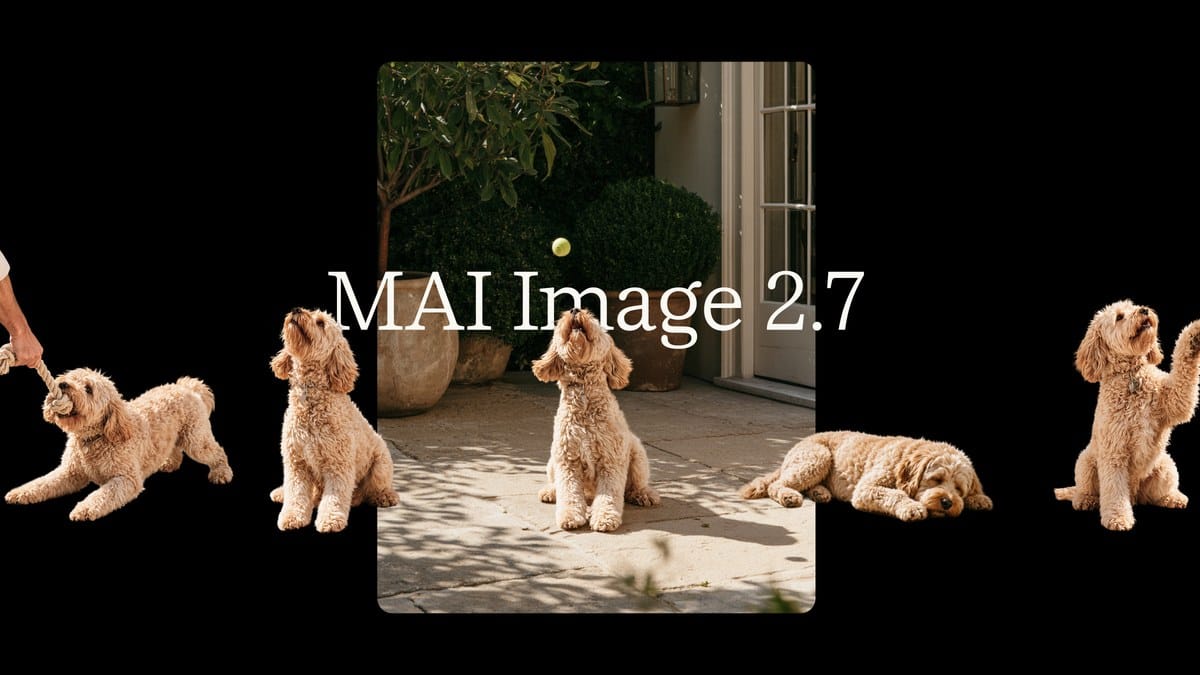
TL;DR: Microsoft opened public previews of MAI Image 2.7 and its Flash variant through Foundry and partner platforms. Both support transparent backgrounds and targeted edits to objects, materials and lighting. Flash also powers Canvas in MAI Labs, where users can start from a sketch and select parts of an image to revise. Read more →
Cerebras Splits AI Inference
TL;DR: Cerebras put split inference into production, using AMD GPUs to process prompts and CS-3 systems to generate responses. On its shared GPT-OSS-120B endpoint, Cerebras measured five times the throughput per megawatt of a CS-3-only setup, with unchanged token-generation speed. It plans broader deployment through 2027. Read more →
MAI Code 2 Reaches Copilot

TL;DR: Microsoft released MAI Code 2 and Code 2 Flash in GitHub Copilot. Across four coding tests, Microsoft reports that Code 2 averaged 98% of GPT-6.1 Sol’s performance at 40% of its cost, using launch promotional pricing. Flash also has a limited-access preview in Microsoft Foundry. Read more →
MAI Realtime Starts at 1¢/Minute

TL;DR: Microsoft introduced MAI Realtime 1, a speech-to-speech model compatible with the OpenAI Realtime API. Base audio costs $0.01 per minute, with reasoning billed separately at $1 per million input tokens and $5 per million output tokens. Developers can try it in MAI Labs or request the limited-access Foundry preview. Read more →
OVHcloud Plans Olala Mini Release
TL;DR: OVHcloud announced Olala mini, a model with seven billion total parameters and one billion active per token. Weights and a technical report are scheduled for Nov. 19 under Apache 2.0. OVHcloud reports 160 tokens per second on an RTX A4500, which has 20 GB of memory; it separately says the model can run on an 8 GB GPU. Read more →
MIRIX Tests Six-Agent Memory
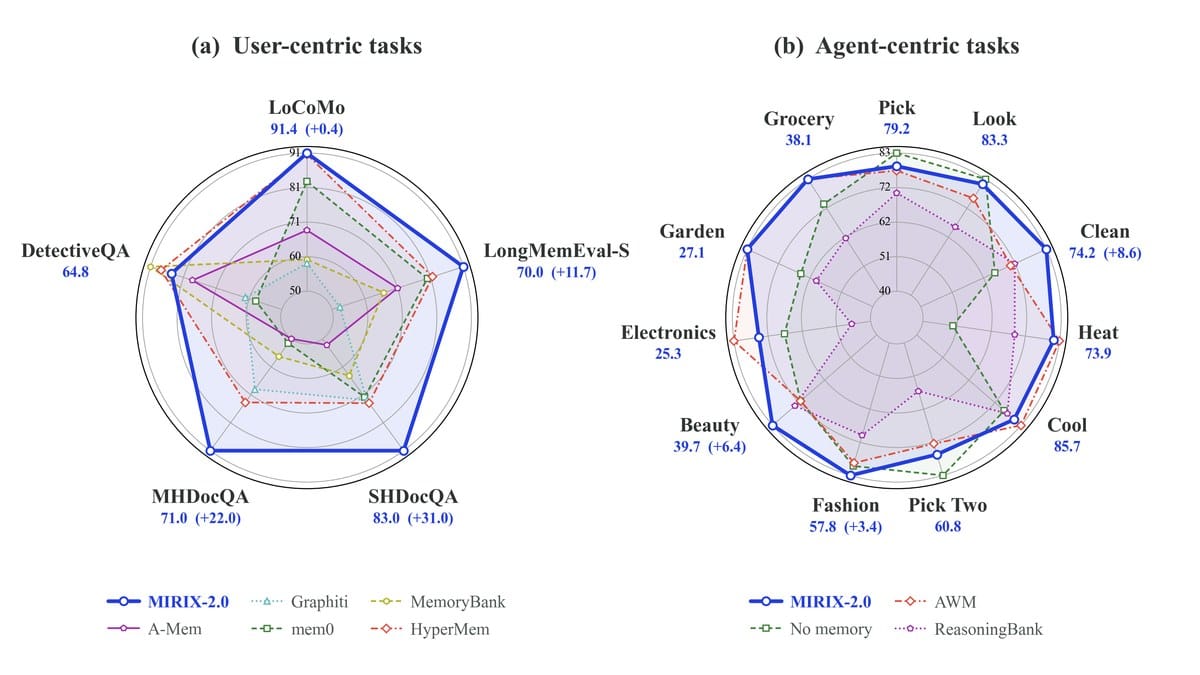
TL;DR: MIRIX-2.0 uses six memory agents to store and retrieve information for LLM applications without fine-tuning. In the team’s Nov. 9 paper, it scored 91.4% on LoCoMo and 72.6% on LongMemEval-S. The latter result was 14.3 percentage points above the strongest baseline the authors compared. Code is public. Read more →
U.S. Tightens Offshore AI Computing
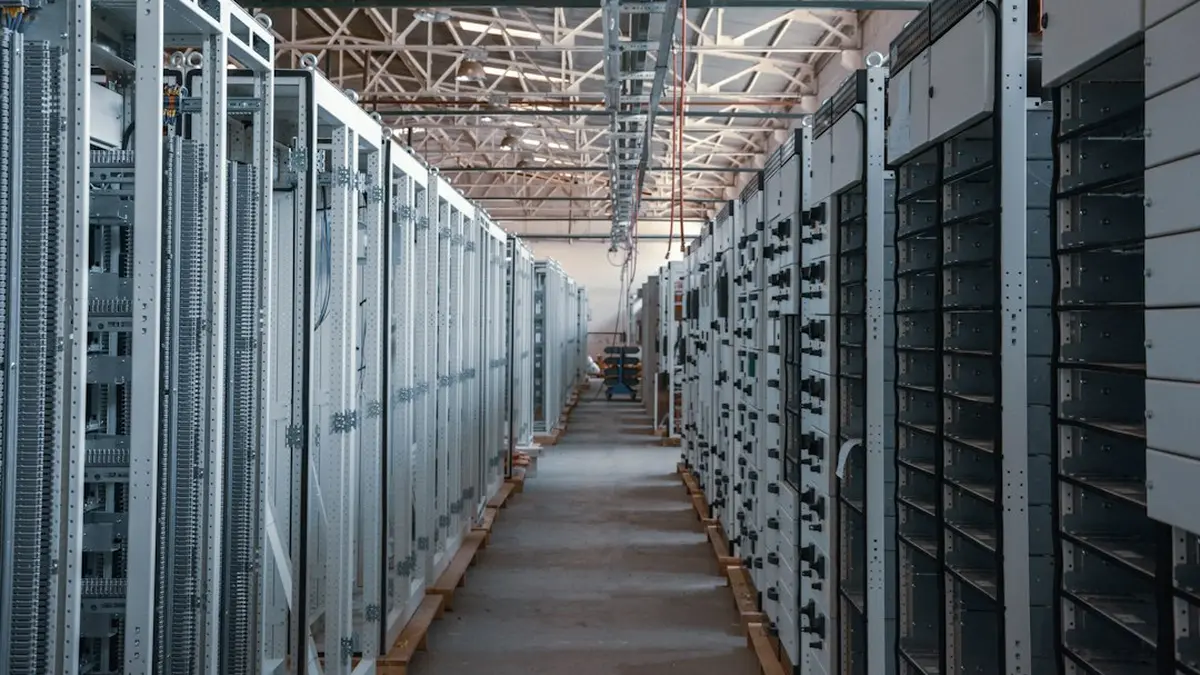
TL;DR: The U.S. Commerce Department issued an interim rule extending AI chip controls to certain overseas data centers providing large amounts of remote computing to customers headquartered in China and other restricted destinations. Existing operators covered by the rule have 90 days from its effective date to obtain a license. Read more →
Google Tracks Agent-Driven Intrusions

TL;DR: Google’s threat intelligence team reports that attackers are using multi-agent tools such as CAIRN and PentAGI during live intrusions. The team also observed fully automated vulnerability discovery and exploitation with no human in the loop. Its report distinguishes tools seen in attacks from frameworks still being tested. Read more →
Open Weights Take 30.9%

TL;DR: Databricks launched a public AI Index built on anonymized usage from more than 10,000 companies on its Unity Gateway. Open-weight models’ share of enterprise token traffic rose from 7.3% in July to 30.9% in November, while companies relying on a single model provider fell from 64% to 28%. The current data covers Sept. 21 to Nov. 7. Read more →
Top AI models. Lower costs.
Access GPT, Claude, Gemini, and more through one OpenAI-compatible API—and save up to 70% on AI API costs. Create your DIT account, get your API key, and start building.