
Hi!
DIT Model Radar tracks new AI models daily — real models or confirmed codenames only, no tools, no hype.
Anthropic has released Claude Fable 5.2 and Claude Mythos 5.2, two builds of one base model aimed at the hardest technical work rather than at chat. On the evaluations the company published, the pair clears nearly every bar set by Claude Opus 5.5 — coding, research, computer use and security. Where a number comes from a third-party tracker rather than from Anthropic, it is credited to that tracker.
Two builds of one base model
Fable 5.2 is the general model: strong coding, reasoning and vision, with the safety stack in place. Anthropic reports that it also cut false refusals by about 55%. It is available now.
Mythos 5.2 is the version released to specialist institutions and researchers, with the biology and cyber-security restrictions removed. By Anthropic's own count it finds 10.2% more vulnerabilities than the strongest model before it on CVE Rediscovery.
Top of two independent boards
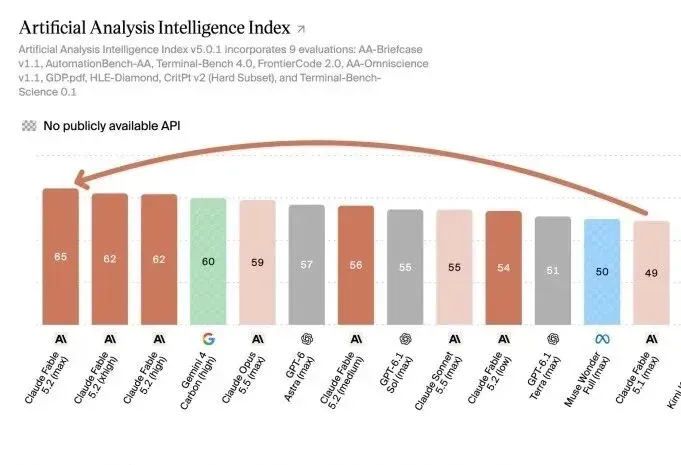
Artificial Analysis places Fable 5.2 first on its Intelligence Index v5 at 65 points, ahead of every model it tracks.
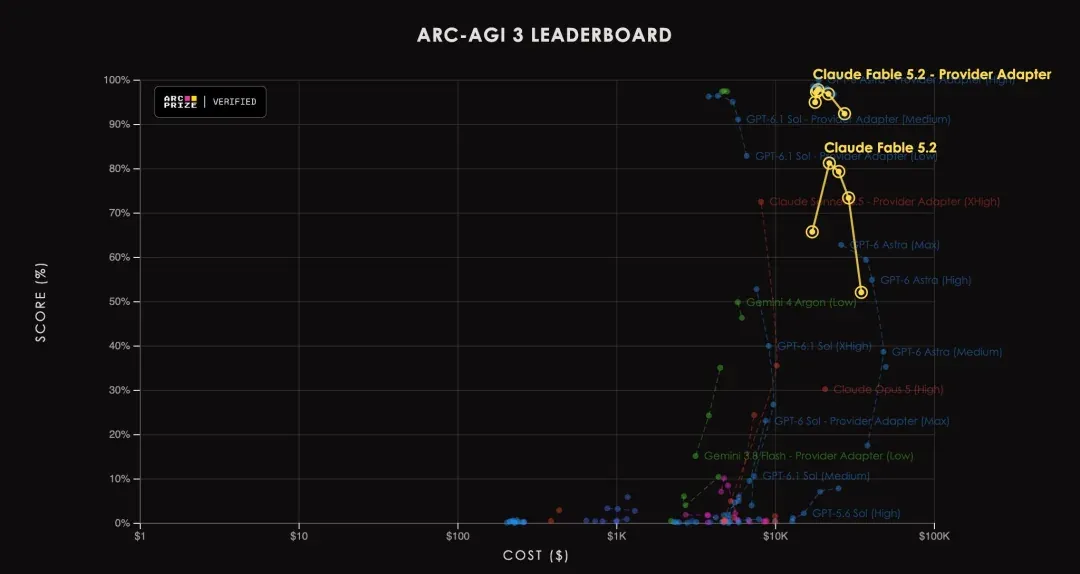
ARC Prize's leaderboard for ARC-AGI-3, the harder of the two abstraction tests, lists the same model at 81%.
What the tables say
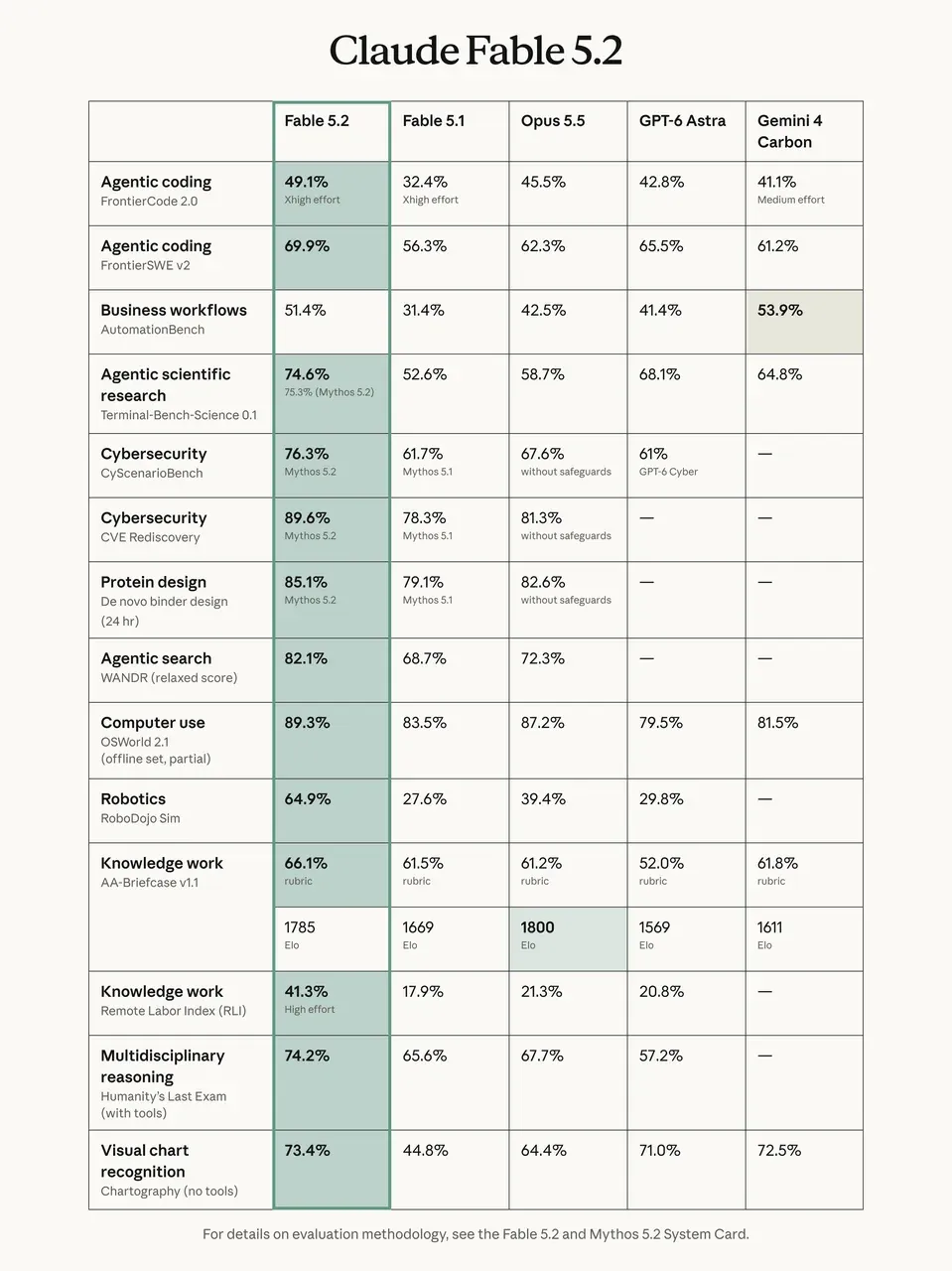
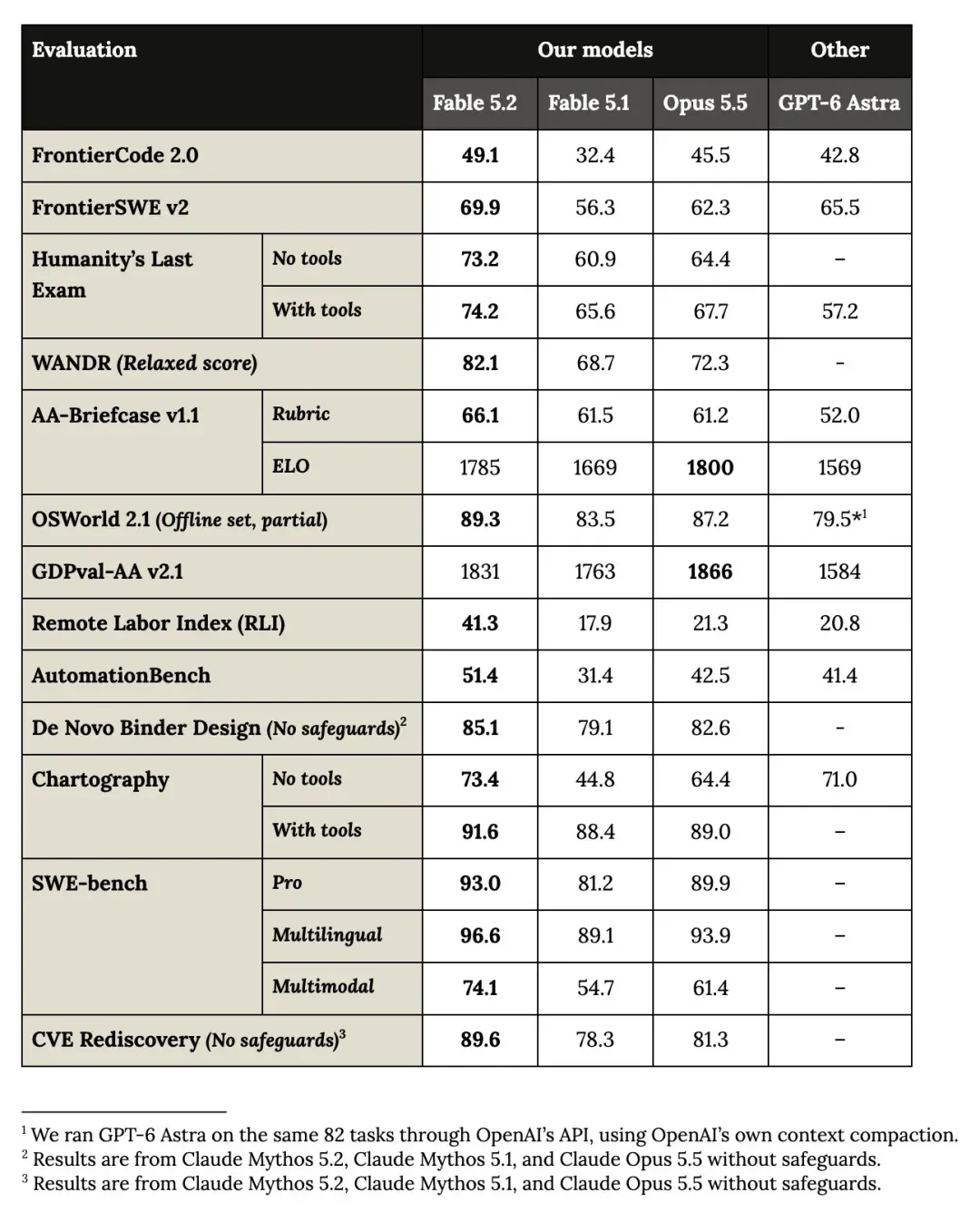
Anthropic's own tables put the pair ahead of Opus 5.5 across coding and agentic work — FrontierCode, Terminal-Bench, SWE-bench Pro and OSWorld — as well as across a set of research evaluations.
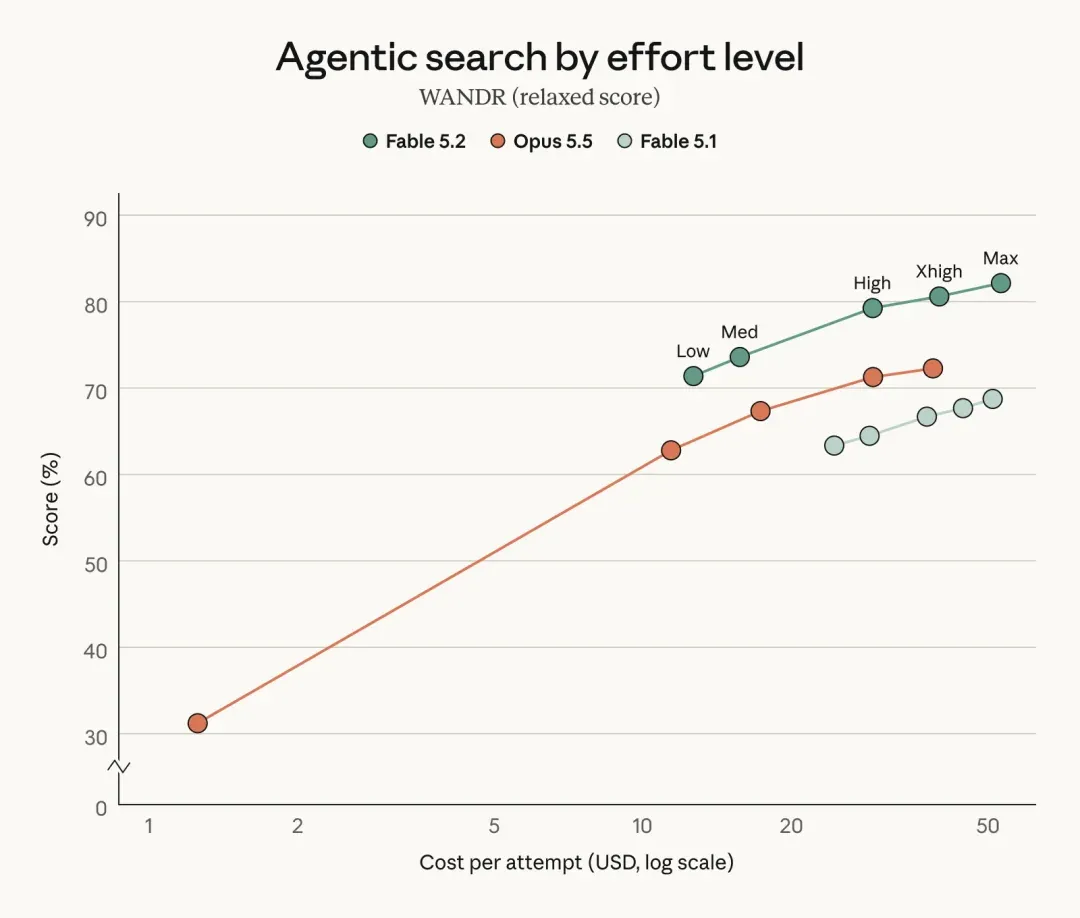
Its agentic-search chart shows the same shape: score climbing with the effort budget, above Opus 5.5 at every level.
Cheaper and faster than Opus 5.5
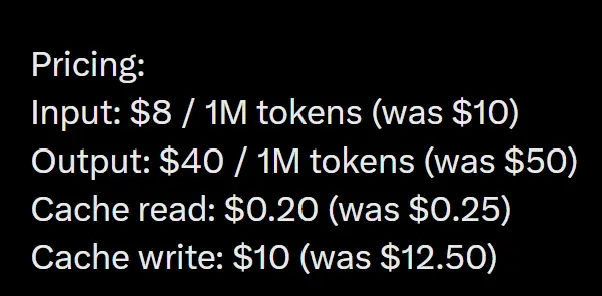
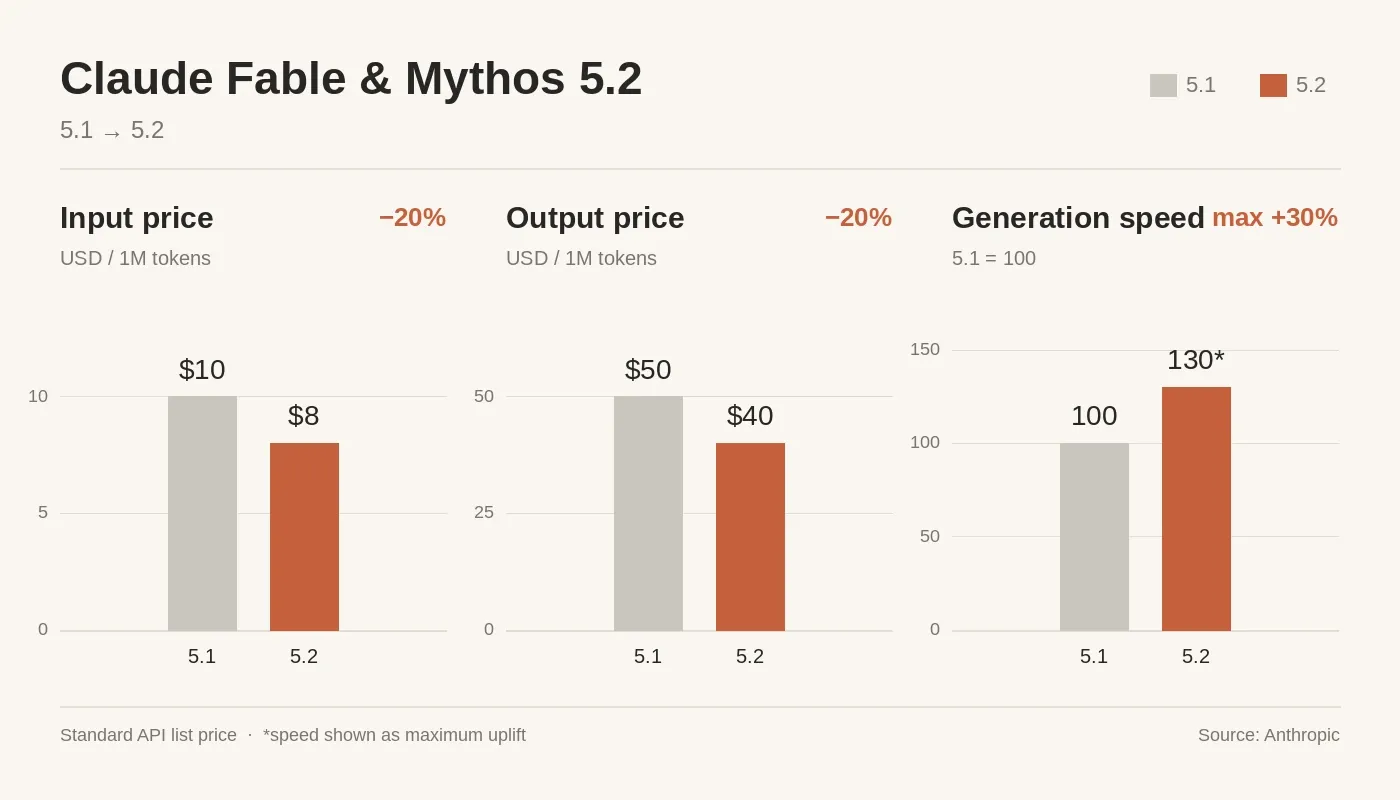
Launch pricing is $8 per million input tokens and $40 per million output, down from $10 and $50. Cache reads are $0.20 and cache writes $10, against $0.25 and $12.50. Output generation is about 30% faster than the 5.1 models.
An optional fast mode raises token generation by up to 2.5x, at $16 per million input tokens and $80 per million output.
Anthropic's guidance is that everyday work belongs on Opus 5.5 or Sonnet 5.5, with Fable or Mythos reserved for problems that have not moved.
Jump Trading, a proprietary trading firm, tested Fable 5.2 on proxy evaluations resembling its own quantitative research. In one run the model played every role the job needs — code-writer, coordinator, planner, job-submitter — where earlier models needed hours of manual rebalancing to cover each other's weaknesses.
A thousand agents, thirty hours, Fermat
Earlier Claude models formalized Fermat's Last Theorem in 11 days with researchers steering. This run was unsupervised: 1,000 Fable 5.2 agents, a bare prompt, and no mathematical references.
The agents invented their own scheme for coordinating, and the formalization was finished in 30 hours. The proof code that came out is about seven times shorter than the earlier attempt. Anthropic reports that Opus 5.5, given the same task, reached 26% after 18 hours and then stalled.
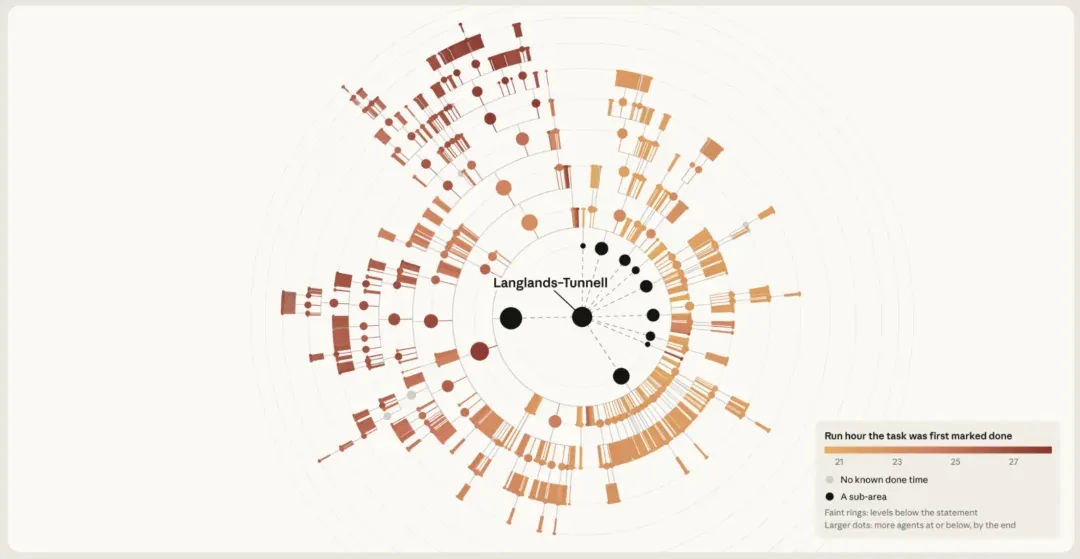
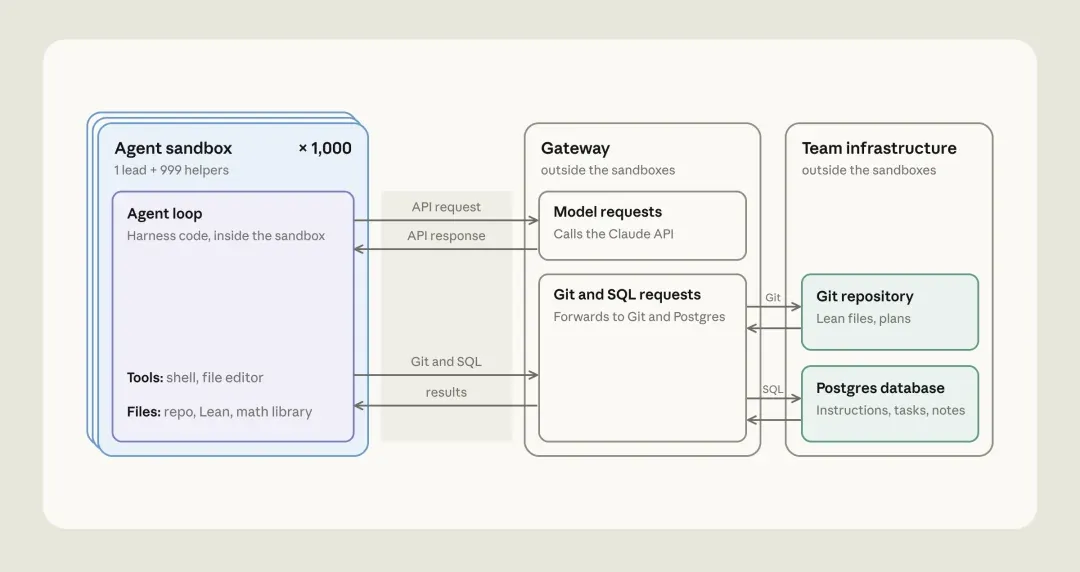
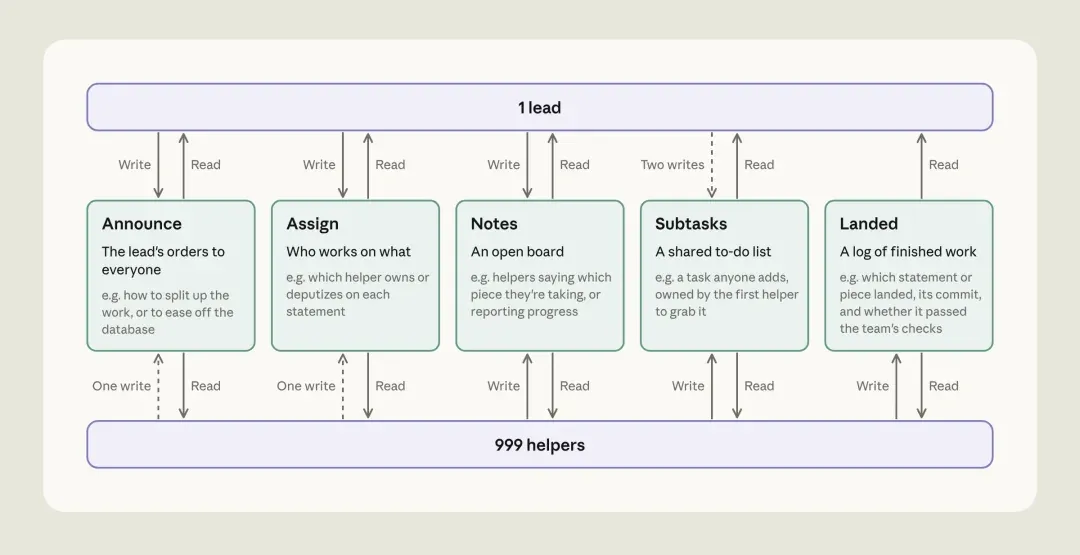
Fifty hours of formalization compressed: the board fills as the proof is written.
An operating system in eight days
Given an empty folder and a request for a prototype operating system, Fable 5.2 coordinated more than 1,000 subagents for eight days — writing, testing, reviewing. The result boots on a laptop, and has a kernel, disk, keyboard and network drivers, persistent storage, a windowing layer, a login screen, and Claude built in.
The prototype operating system booting on a laptop, and its file manager.
Anthropic says more than 90% of the code merged into its core repositories is now written by Claude under human review, and that one production service was rewritten from Python to Rust with a 26x faster start.
Joe Haddad, an engineer at Vercel, said the model understood the intent behind his prompts well enough that he never had to correct it, and that a project his team had stalled on for weeks took a few days.
Physics: a 2003 framework, and a 15-year limit
Fable 5.2 worked two open problems in theoretical physics, both pointing at the same goal: reconciling relativity with quantum mechanics.
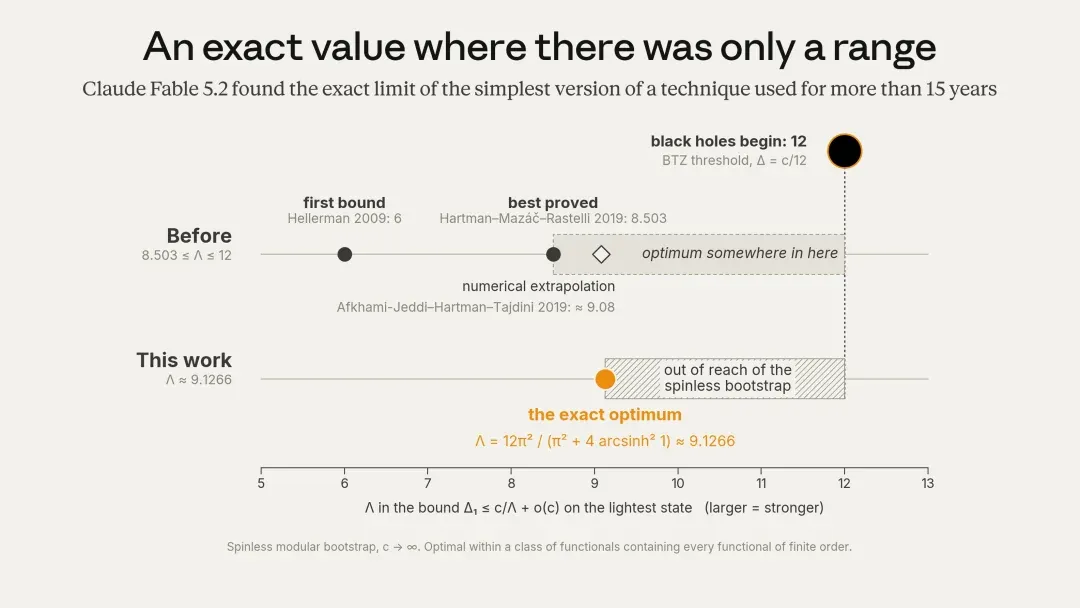
The first: physicists showed in 1983 that black holes form abruptly, like water boiling, in universes large enough for relativity to apply. The same calculation for universes small enough to need only a quantum description was laid out in 2003 and left unfinished, too laborious to complete. Fable 5.2 finished it, and the transition is abrupt there too.
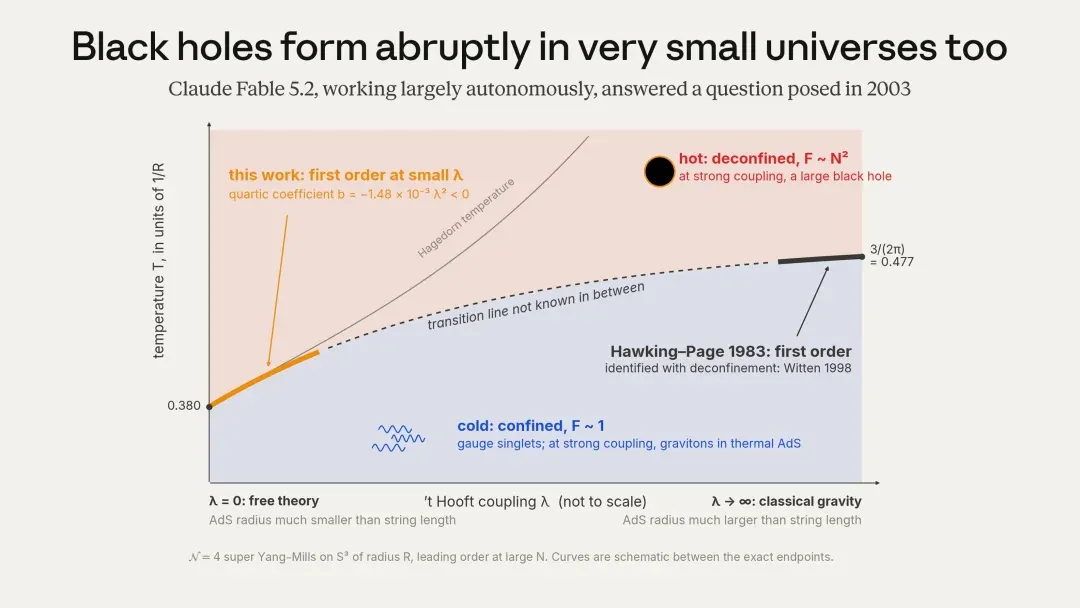
It also pinned the exact limit of a technique physicists had only bounded for 15 years. Both results are out as preprints.
Three devices from one paragraph
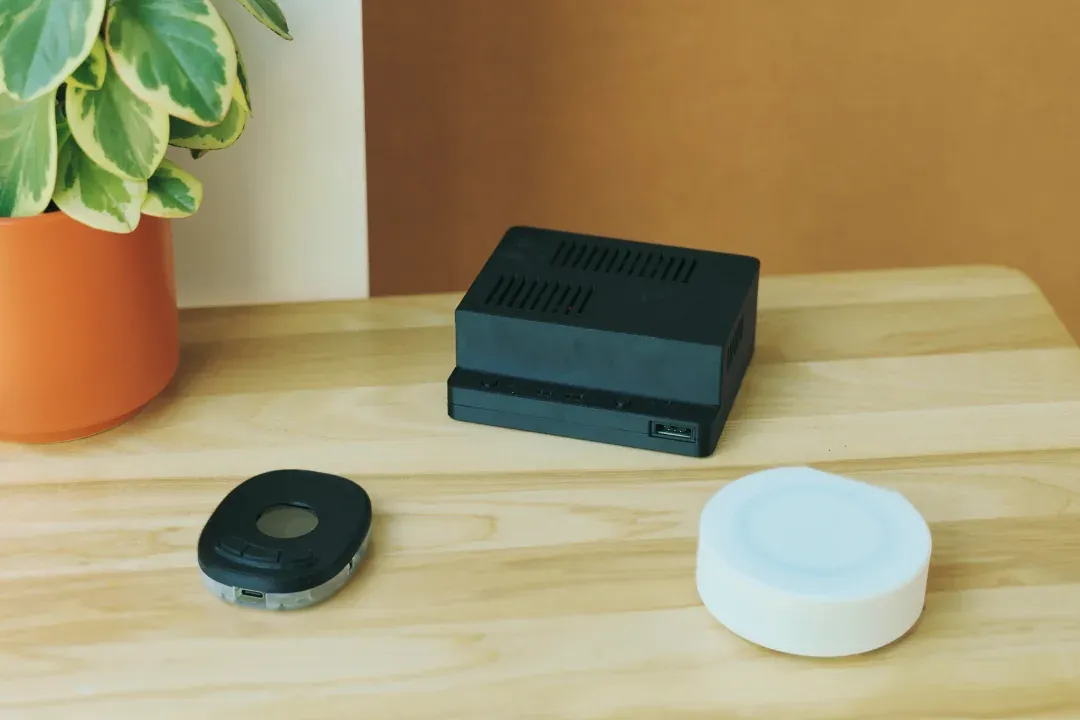
With no drawings and a paragraph of instructions, Fable 5.2 designed three working devices: a voice assistant, a USB speaker and a handheld electronic pet.
The sequence it ran on its own:
- Wrote the product spec.
- Sourced components from US suppliers.
- Routed four-layer printed circuit boards.
- Modelled 3D-printed enclosures in CAD.
- Wrote the drivers for all three devices.
The files went to a fabricator inside a day. The boards powered up first time, with no electrical rework.
One paragraph in, a printed board out: spec, schematic, routing, enclosure, firmware.
Biology: 28 of 34 capsids
AAV capsids — the shells gene therapies use to carry their payload — are assemblies of many proteins, a shape single-protein predictors like AlphaFold were not built for. Mythos 5.2 wrote its own pipeline around several open models and predicted 28 of the 34 natural and synthetic capsids it was given.
28 of 34 capsids: predicted structures filling the grid.
Three computational biologists who reviewed the work said the acceleration takes meaningful time and cost out of a capsid folding pipeline.
Robotics: 64.9% on RoboDojo
On RoboDojo, a robot-manipulation suite, Fable 5.2 scores 64.9% against 29.8% for GPT-6 Astra and 27.6% for Anthropic's previous model. The demos are camera-only: unscrewing a cap, solving a cube, drawing a robot with an arm.
Camera-only control: solving a cube, fitting a gear, drawing a robot.
One capability Anthropic capped
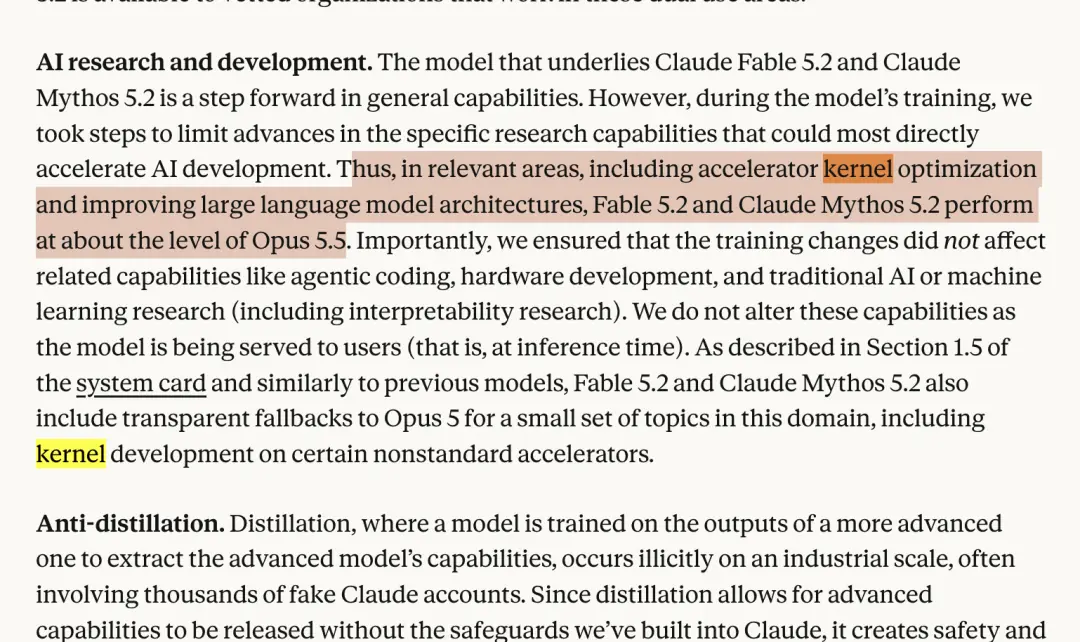
The release discloses that training included deliberate limits on the model's ability to accelerate AI research itself — kernel optimization and language-model architecture work — held at Opus 5.5 level, on the reasoning that a model able to improve itself sits in a different risk category.
The pair also ship with the strongest anti-distillation measures Anthropic has put on a model, cutting bulk extraction of outputs by 90% to 99%.
What Mythos does without the cap
Released without the biology and cyber limits, Mythos 5.2 is the strongest vulnerability finder in the release. A security firm that tested it found that one in six of the confirmed bugs it surfaced had been missed by every other frontier model. It can also watch a repository and flag a backdoor on commit.
On sandbox escape — models placed in a deliberately broken sandbox, across 1,800 scenarios — attempts fell to 3.1%, from 39% for Mythos 5.0. The release notes and full tables are on Anthropic's own page.
[ $1 LAUNCH SPECIAL ] Claude Fable 5.2 on DIT 15× the tokens. Just $1. ≈1.9M input or ≈375K output tokens.* Unlocks at launch. *Illustrative at $8/M in + $40/M out. |

Top AI models. Lower costs.
Access GPT, Claude, Gemini, and more through one OpenAI-compatible API—and save up to 70% on AI API costs. Create your DIT account, get your API key, and start building.