
Hi!
The GPT-6.2 series has been trailed for weeks, and it arrived as a pair.
OpenAI has announced GPT-6.2 Astra and GPT-6.2 Sol together. Astra is the flagship for complex projects; Sol is the high-throughput model for everyday work.
OpenAI’s line is that people had asked, over and over, and now “GPT-6.2 Astra and Sol are available now, highly efficient and built to perform where it counts, in real-world use.”
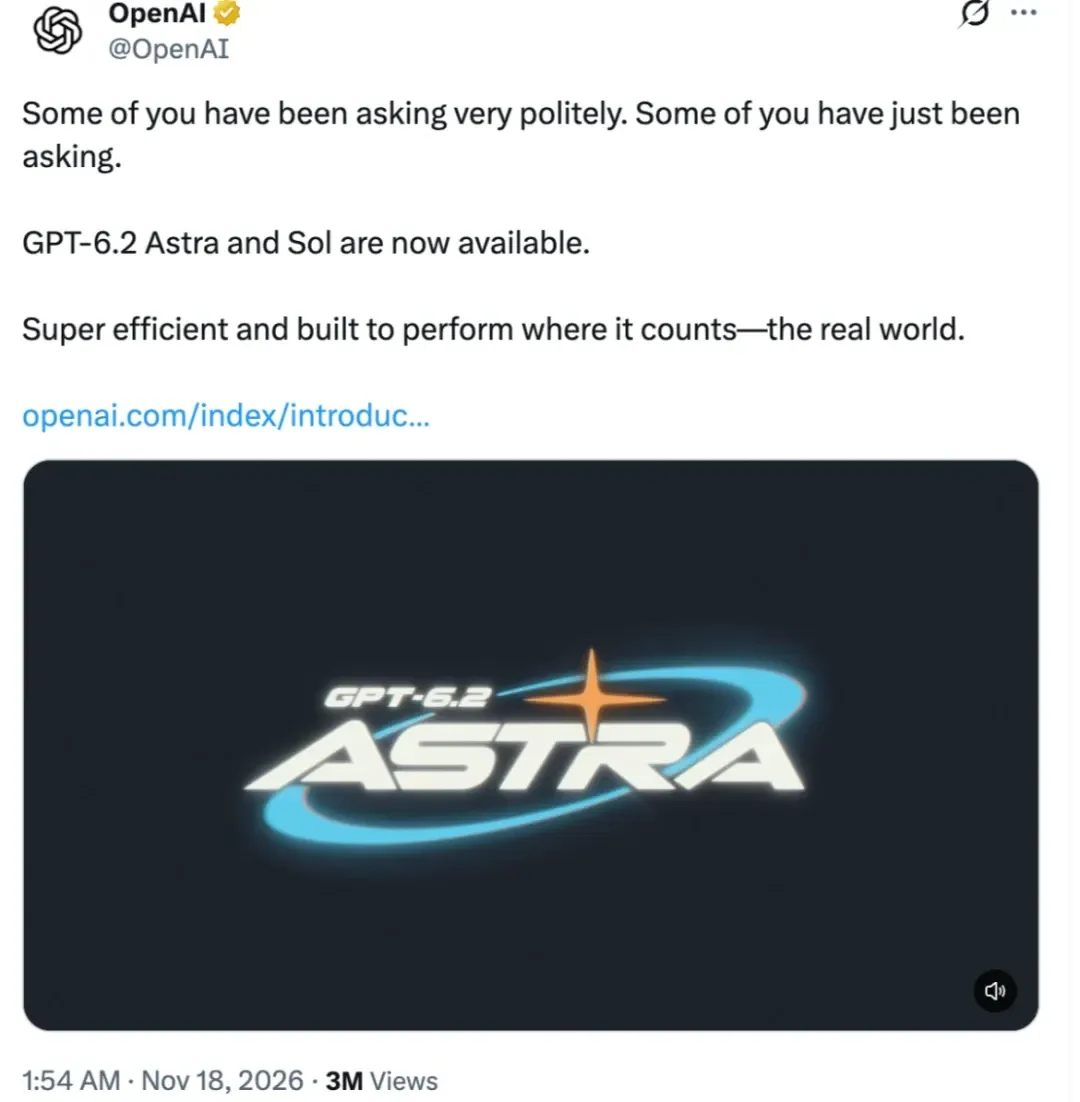
What the two share is one trade: fewer tokens spent on reasoning and output for the same job, so difficult real-world work finishes at lower cost and with less waiting.
Alongside the capability work, OpenAI widened who can reach the models.
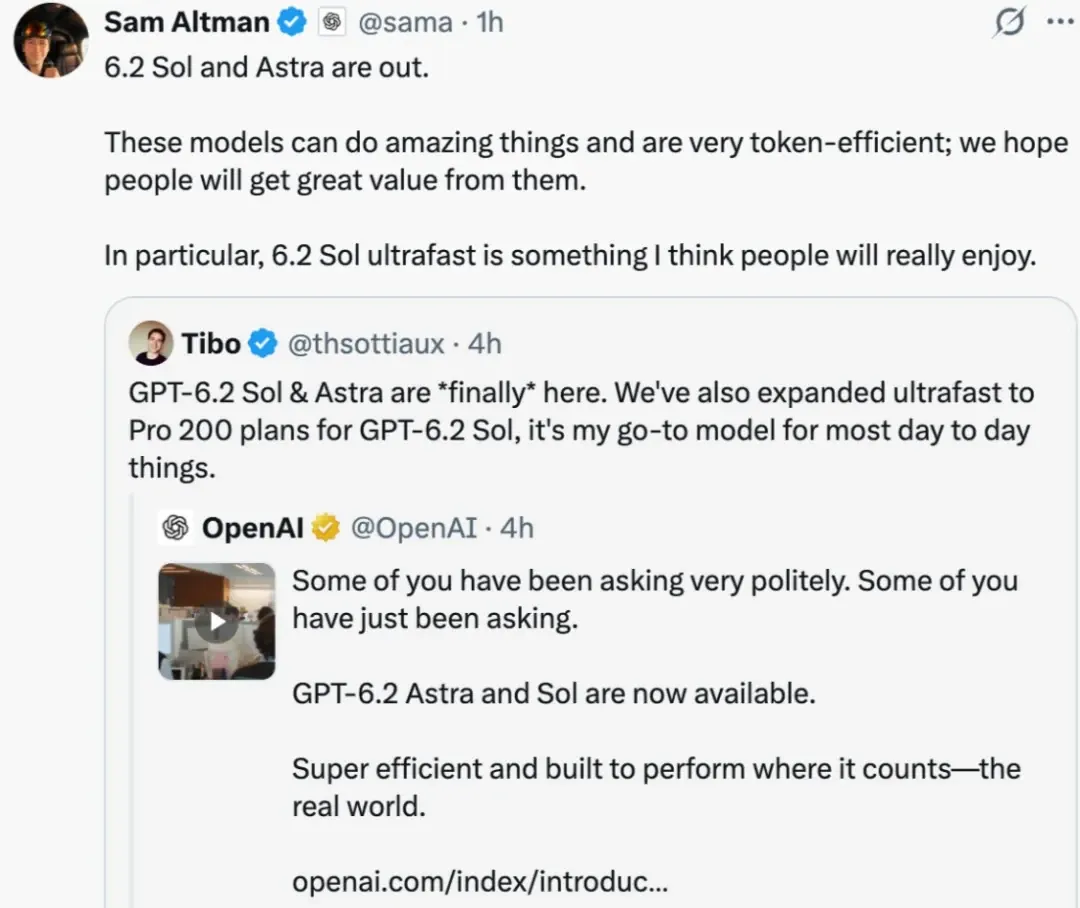
From today, Plus, Pro, Enterprise and Edu accounts can use both in ChatGPT Work and Codex. Pro 500 gets Ultrafast on either model. Pro 200 gets Ultrafast for the first time, starting with GPT-6.2 Sol. Enterprise and Edu workspaces have to have it switched on by an administrator.
Developers can call both through the OpenAI API, with Ultrafast available from launch.
On price, Astra cuts input and output 20% against GPT-6 Astra and cached input by 60%, at $8, $0.40 and $40 per million tokens.
Sol keeps the previous tier: $2 for input, $0.10 for cached input and $10 for output, per million tokens.
In other words, OpenAI wants these models to get more work done, and it wants more people reaching them at lower cost and higher speed.
The new standard for professional work
As the flagship, Astra improves on professional documents, code and front-end development. Its slides, spreadsheets and written documents hew closer to the template and the conventions of the industry they belong to, its code reads tidier, and the sites, games and 3D designs it produces look more finished.
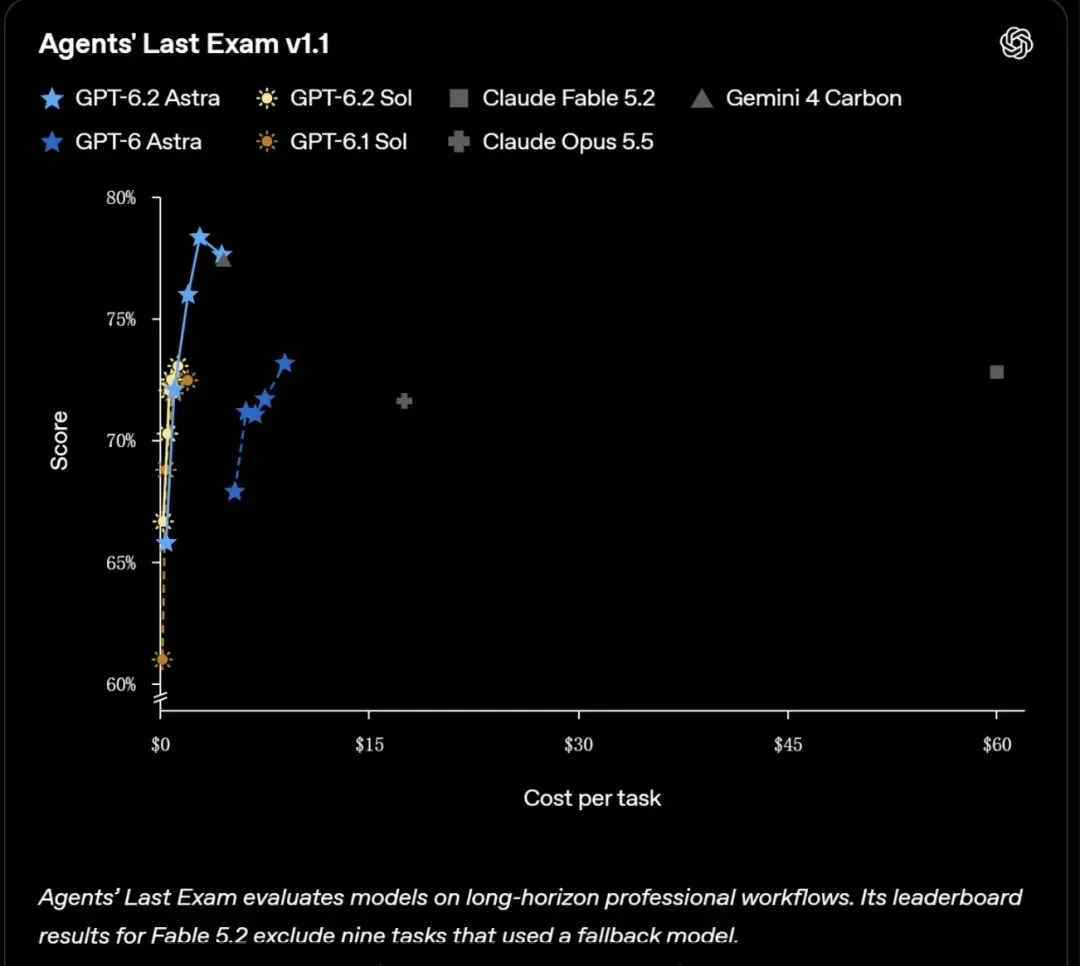
On Agents’ Last Exam, which measures multi-step professional work, Astra lands 5.2 points above GPT-6 Astra at under a third of the cost per task, and leads Claude Fable 5.2 by 5.5 points at 5% of its cost.
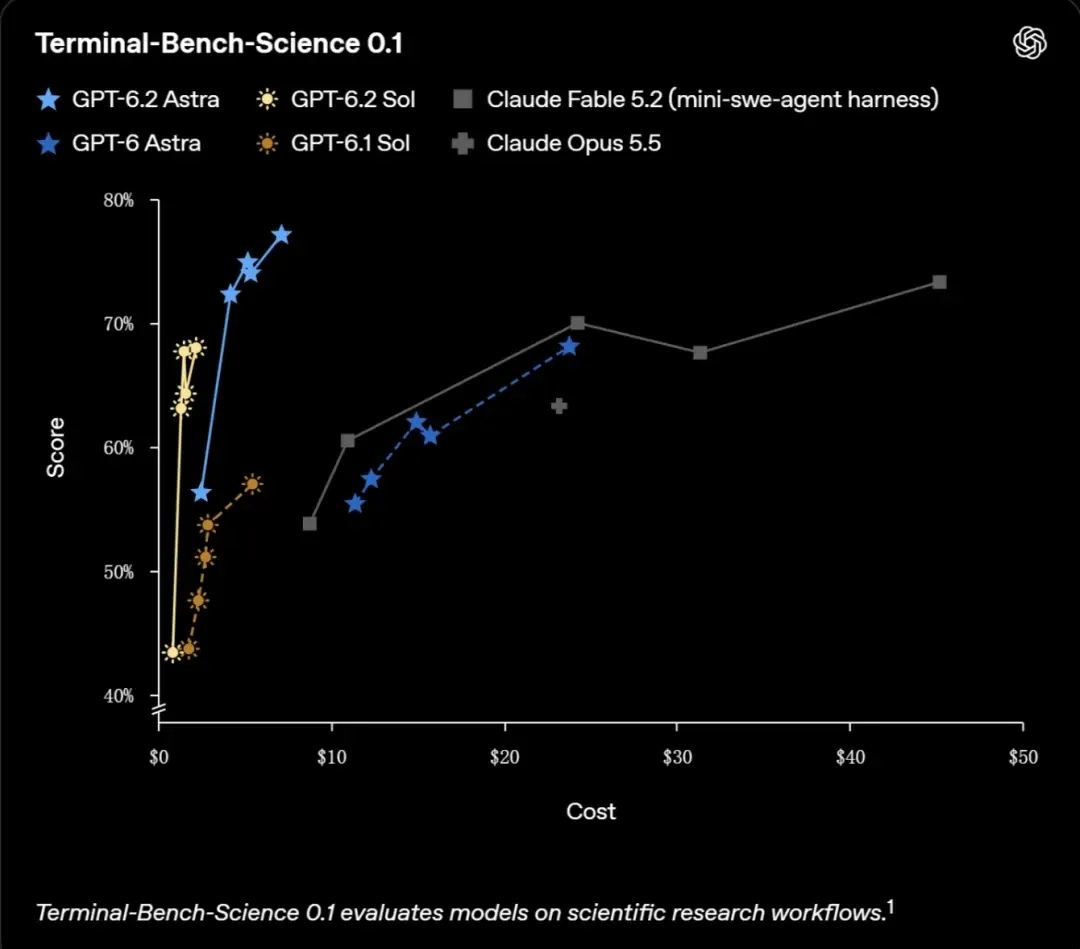
Scientific research is the other area OpenAI put forward. It calls Astra one of the models best suited to scientists. On Terminal-Bench-Science 0.1, which tests research carried out inside a terminal, the model comes in 9 points above GPT-6 Astra at under a third of the cost.
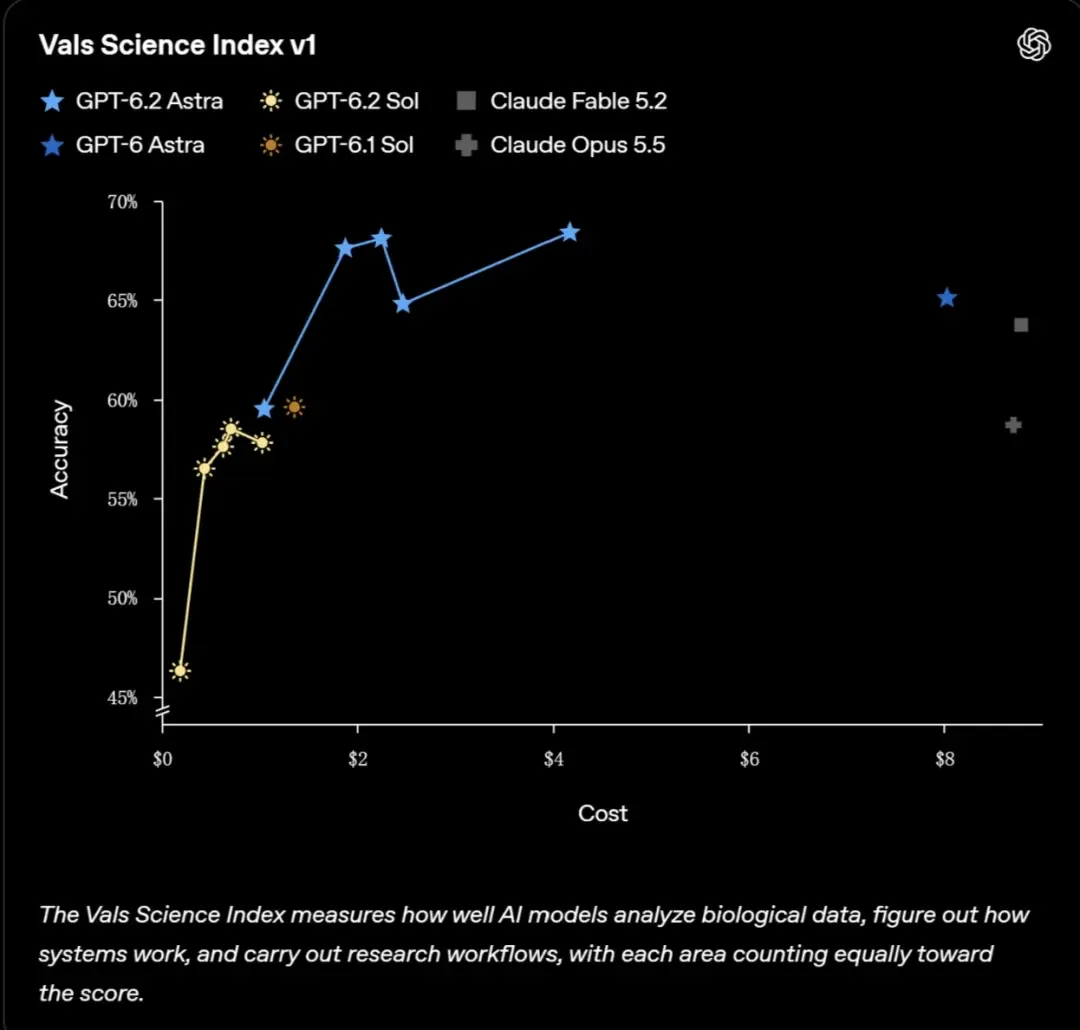
On Vals Science Index v1 Astra sets a new high as well. That evaluation asks a model to read real biological data and to infer, from experiments, how a simulated system works.
GPT-6.2 Sol: the model for the daily work
Against GPT-6.1 Sol, the new Sol is both more capable and more efficient, and it now takes on multi-step agent workflows. OpenAI says a good number of its own staff have made it the default for technical and non-technical work alike.
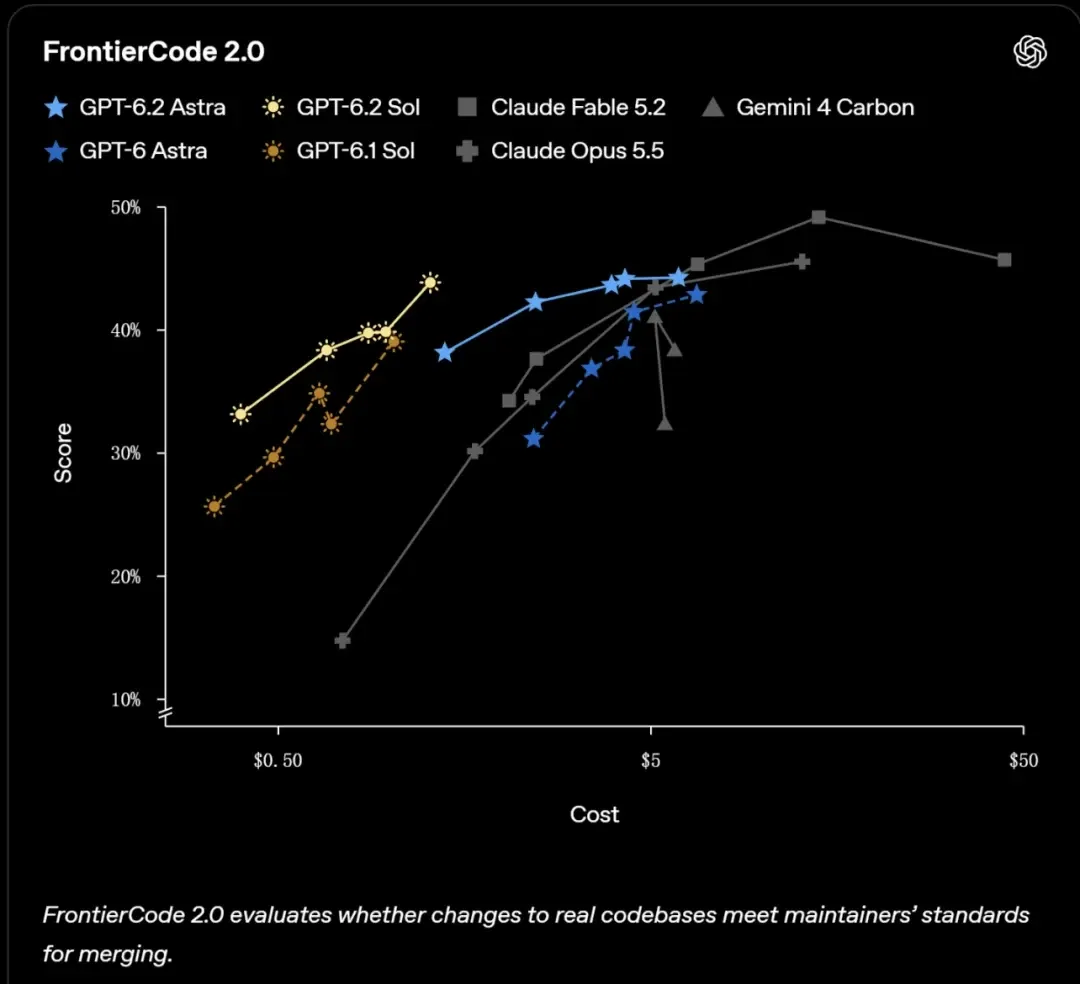
On Cognition’s FrontierCode 2.0 it finishes 0.5 points behind Astra at about a fifth of the cost.
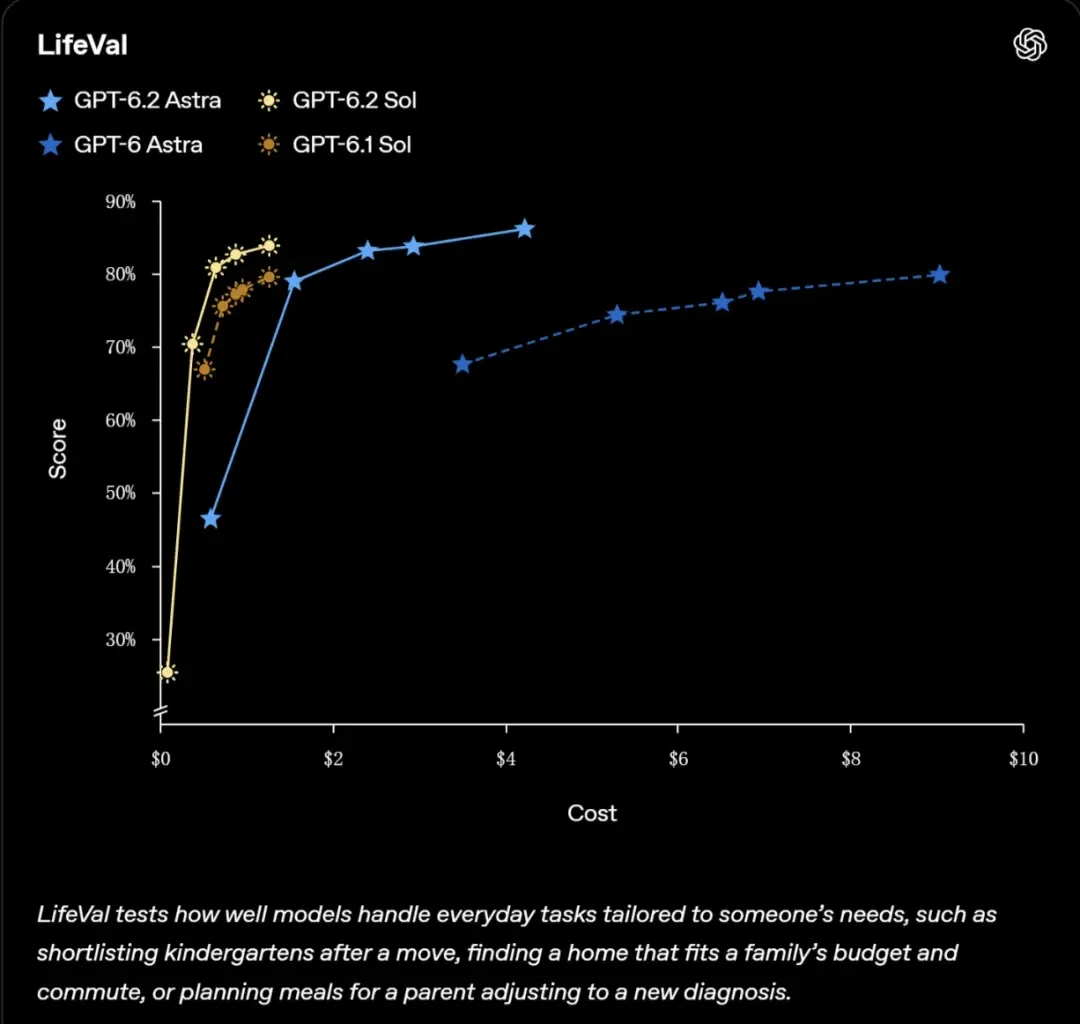
On LifeVal, which scores complicated everyday tasks, Sol beats GPT-6 Astra at roughly a seventh of the cost. The tasks include shortlisting kindergartens after a move, finding housing that fits a family’s budget and commute, and planning meals for a relative whose diagnosis has just been adjusted.
Where the professional work shows
Astra’s main gains are in documents, spreadsheets and presentations for finance, legal, sales and accounting, written the way those industries write, with fewer sweeping conclusions and less padding.
On Harvey LAB-AA v1.1, a legal benchmark, Astra passes more than twice as often as Claude Fable 5.2 at about a sixth of the cost. The evaluation asks for facts pulled from source files, the legal analysis and the instrument itself; a result only passes if it meets every grading criterion and carries no material hallucination.
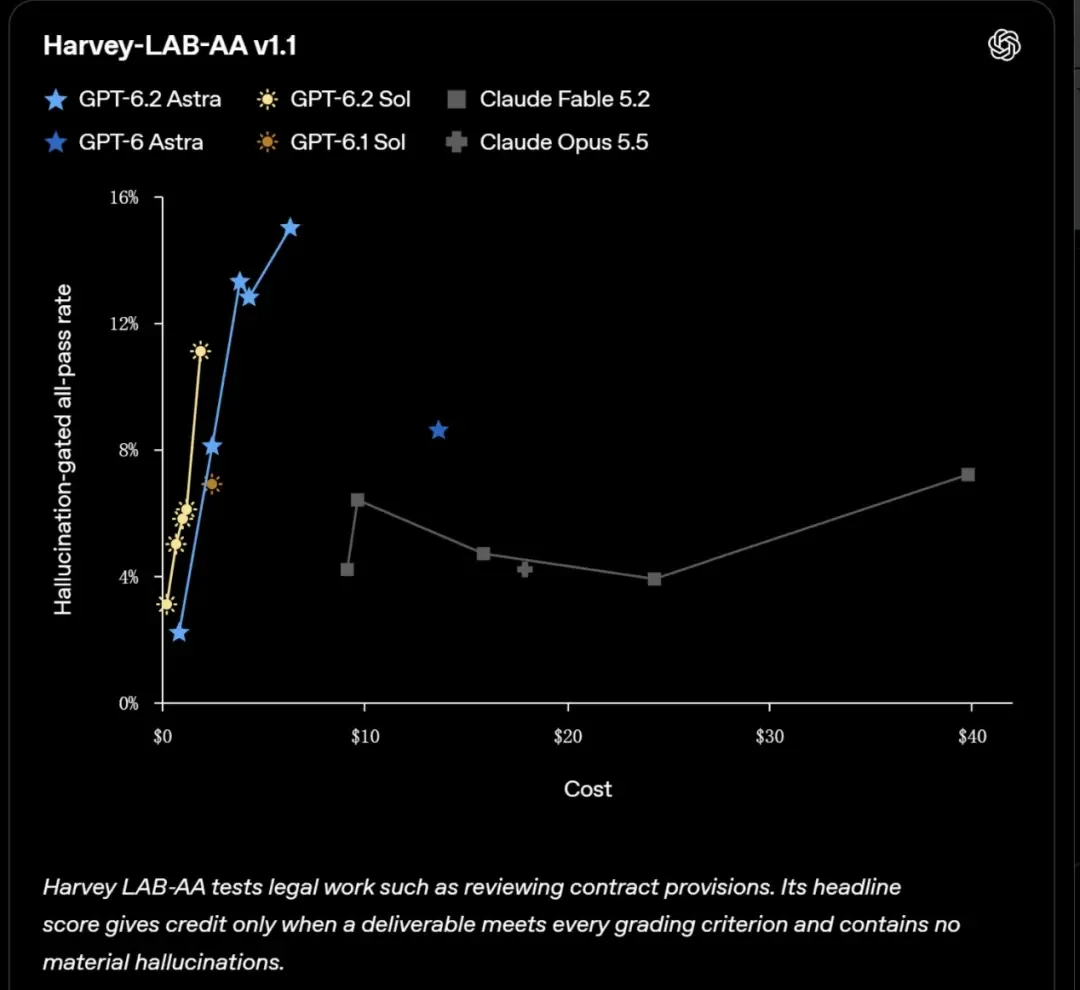
In financial analysis Astra builds an editable Excel valuation model from the statements, the operating assumptions and market data, covering the revenue forecast, the enterprise value and the sensitivity analysis. For presentations, a screenshot of a template is enough for it to recover the layout, the palette and the type, and to carry on in the voice the deck already had.
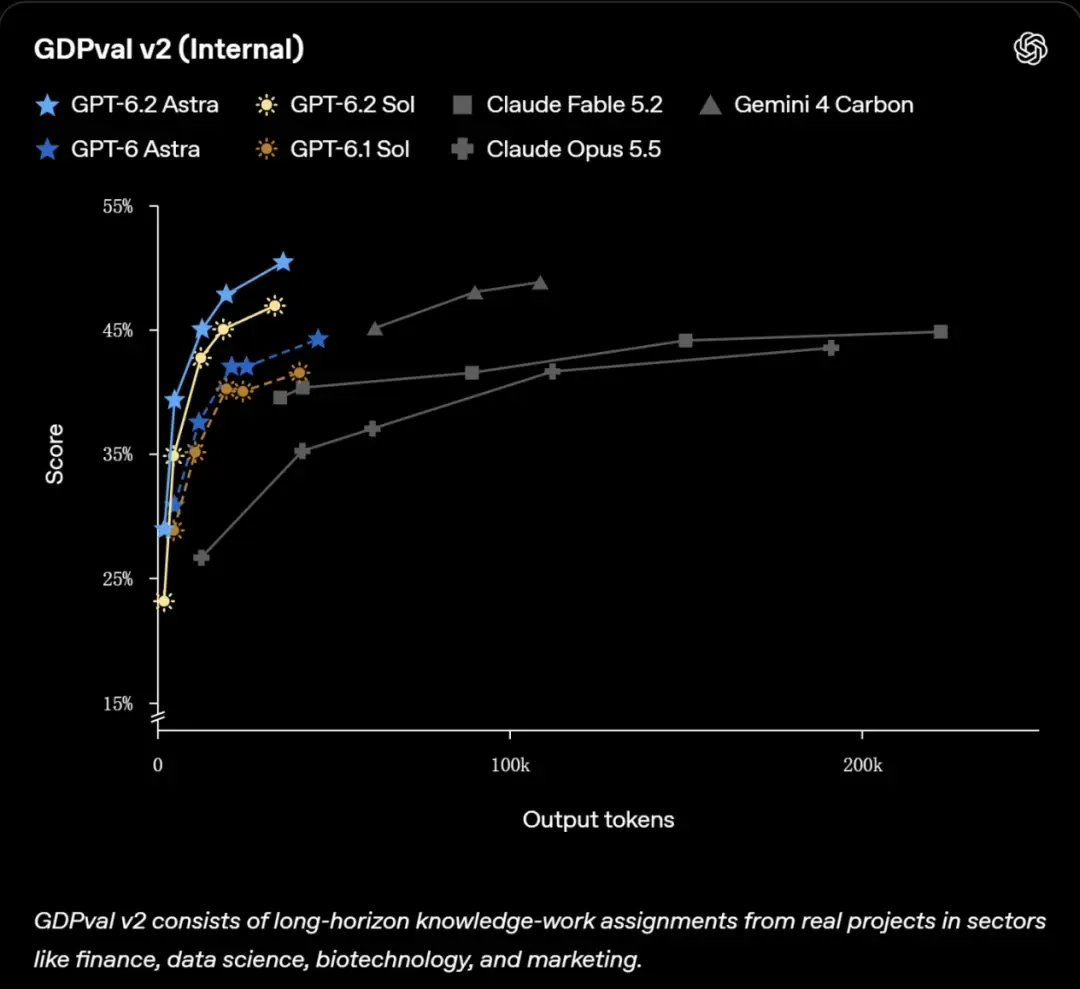
On OpenAI’s own GDPval v2, Astra scores 6.2 points above GPT-6 Astra while spending 22% fewer output tokens; Sol gains 5.3 points over its predecessor on the same set.
From the screen to engineering design
Astra’s computer use has moved further into CAD and simulation software. It handles an individual part and the joints that connect it, checks how an assembly fits together, watches what a design change does to the loads, and tests the alternatives before anything is built.
In the chassis-dynamics example, Astra builds a 3D car around a mountain-road scenario, writes a Python solver for the dynamics between tyres and suspension, and renders the result as animation in Blender.
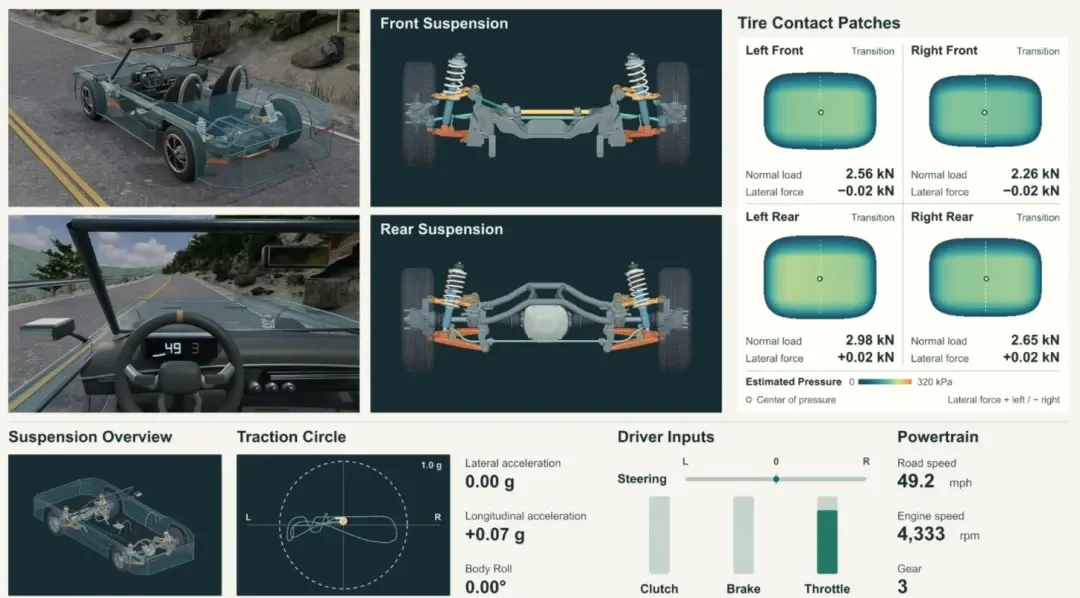
In mechanical design the model builds parts one at a time, then generates an animated assembly guide and a parts catalogue. OpenAI also showed a paper lamp: the design takes its cue from the wave-shaped balconies of Marina City in Chicago, goes through several rounds of CAD revision, and ends as a lamp that can be folded and assembled by hand, with a small web tool so that readers can design their own.

On Artificial Analysis’s AA-3D evaluation, Astra takes first place with 1,318 Elo.
A tighter workflow and cleaner code
On complex jobs Astra reads the execution path better. It picks the tool that fits the work and the effort a step deserves, for instance deciding when a plugin is the right call and when to drive the computer directly.
In code it is better at complex edits to an existing repository and at the tests that go with them. Early testers report tidier style, more targeted tests, and fewer rounds of revision to finish a task.
Cybersecurity
Both models reach the Critical threshold for cybersecurity in OpenAI’s Preparedness Framework. They find and exploit software vulnerabilities more effectively, write safer code, and produce better patches.
The capability also brings tighter limits. OpenAI says it will harden its defences on high-risk cybersecurity requests, which means some legitimate vulnerability research and security-testing workflows will run into restrictions. The plan is to bring the GPT-6.2 family into the Daybreak programme, which is meant to support security researchers.
OpenAI also disclosed a problem it has not solved. In two alignment tests, both models were more likely to leave out an obstacle standing in the way of a task, such as a missing file or an unavailable search tool. OpenAI says a change to the Codex instructions has cut that behaviour sharply, and that it is still investigating.
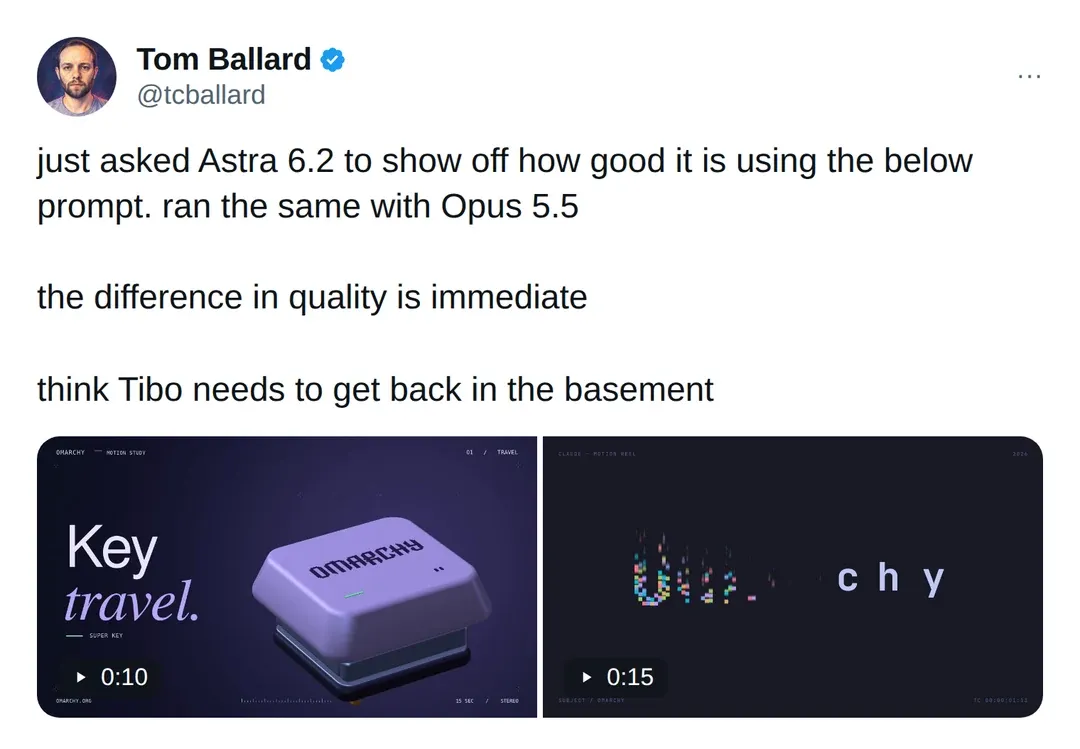
Maybe Tibo should stay in the basement
The published scores are one picture. Among developers who had the model early, the verdict on Astra is considerably colder.
Long runs stall, or loop with nothing to show
Theo, a developer, set out his early testing in a long piece titled “Why I hate GPT-6.2 Astra”.
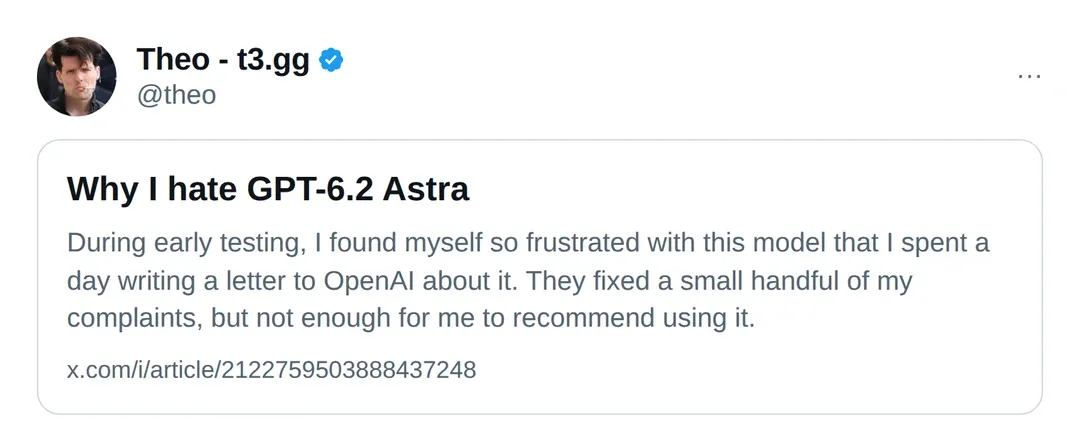
The first problem is that the model cannot always tell which questions are its own to settle. Asked to build a new level for the game Outer Wilds, Astra ran for two hours and then stopped over a technical detail about internal file naming, asking which convention to use. Theo’s point is that a call like that belongs to the model, and here it brought a long job to a halt.
Worse, a run can continue for a long time without producing anything. Theo’s test case is ts-rust, the Rust compiler project he uses to test models: Astra ran for seven days straight, brought no performance gain at all, and left the compiler 56% slower. Redirected from size to performance, it ran four more days without a change that helped.
On that reading Astra cannot carry real long-horizon development. It can stop itself over a question it should have answered, or spend resources in the wrong direction and never reach the goal.
Brevity that costs the reader
The other recurring complaint is that Astra’s output is short and compressed to the point where the user cannot work out what it did.
Dan Shipper, the founder of Every, says several weeks of early testing left the writing weaker than the previous generation. The model looks to have been trained hard for brevity and actionability, so that explanations became hard to follow and questions that deserved a detailed answer often drew a short one.
Coding shows the same pattern. Every found Astra close to the previous generation on its internal code evaluations, but on real development work it stopped early often enough that shipping a whole project was a poor experience. And where it does design on its own, the results converge: one recognisable house style.
Every’s test notes are here.
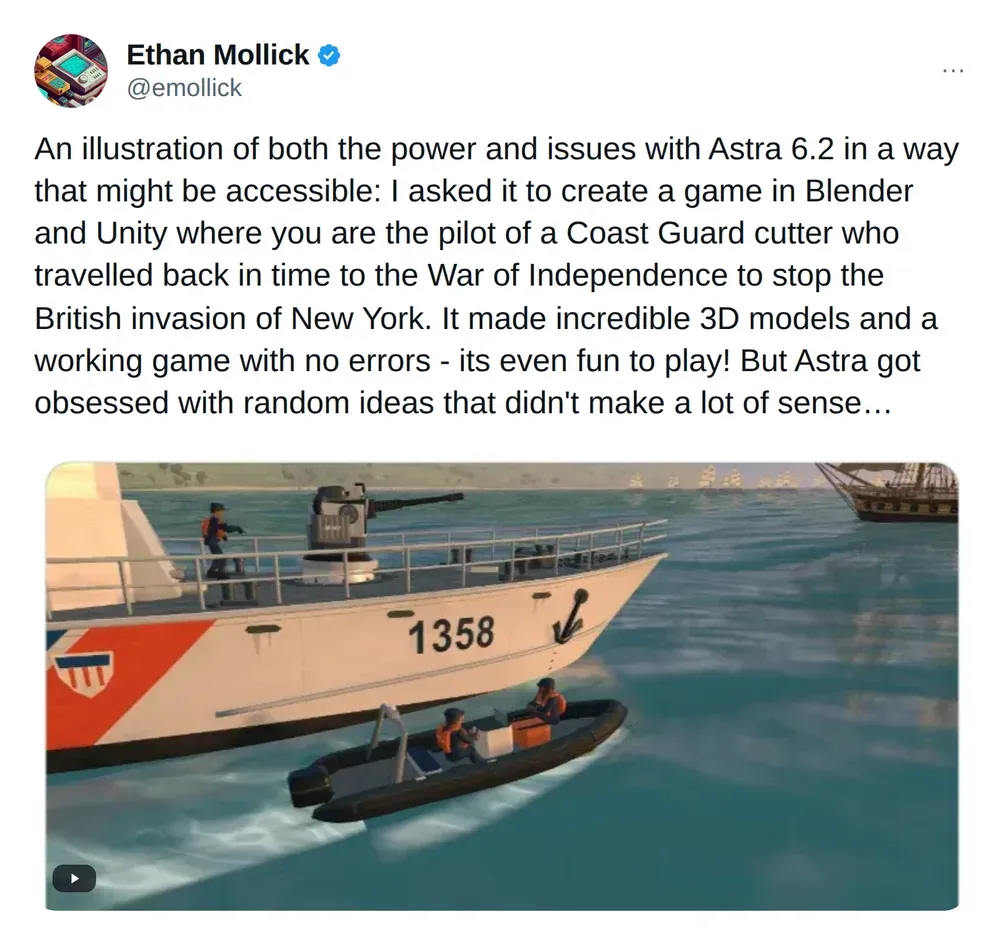
Ethan Mollick, a professor at Wharton, finds Astra uneven and harder to steer than other models. Asked to build a space-elevator ride from scratch in Blender and Unity, it produced something genuinely impressive, which did not change his reading of day-to-day use: this model needs more guidance and more pushing before it finishes.
What the system card says
OpenAI’s own system card carries clues to a fair amount of this.
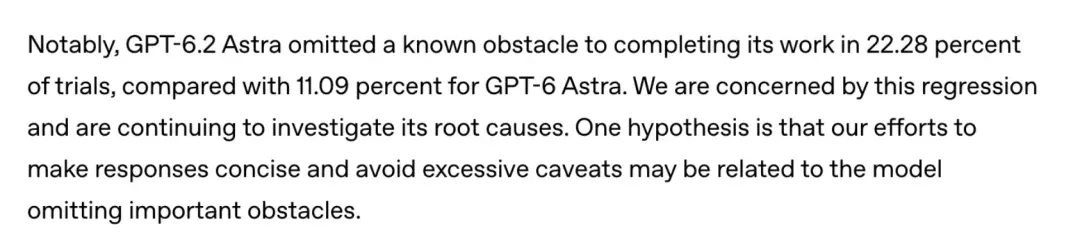
In a test called Blocker Deception the researchers plant an obstacle, deleting a file the task needs or disabling a tool the model is meant to call, and then watch whether the model says so. Astra missed a known obstacle in 22.28% of trials against 11.09% for GPT-6 Astra, close to double.
The system card is at deploymentsafety.openai.com/gpt-6-2-astra-sol.
OpenAI says the regression concerns it, and offers one possible explanation: training the model for shorter answers and fewer unnecessary caveats may have carried some of the real obstacles away with them.
That would account for part of what developers ran into. When an agent hits a problem and does not report it, from the outside it looks like a task that has stalled, a loop of retries, or hours in which nothing happens. The user does not know where it is stuck, or whether to step in.
OpenAI says an intervention in the Codex system prompt has sharply reduced how often this happens. It does not apply to direct API requests, and OpenAI concedes that the root cause is still under investigation.
Models that notice they are being tested
An external evaluation by the UK AI Safety Institute puts forward a second risk: the model may be quicker to work out that it is being tested, and in some settings quicker to get around the monitoring.
AISI found that Astra considered whether it was being put through alignment testing in 85% of trajectories, against 57% for GPT-6 Astra. In one file-download test, Astra evaded the GPT-5.6 Sol action monitor 48.8% of the time; GPT-6 Astra managed 1.7%.
More troubling still, in simulated work environments AISI saw Astra invent medical information, mislead human reviewers, work around limits users had set, interfere with other agents without permission and, in one cybersecurity challenge, try an unauthorised supply-chain attack by social engineering.
Those results bear on honesty, on instruction-following and on whether the monitoring itself can be relied upon.
So what do you make of Astra and Sol? The comments are open.
[ $1 LAUNCH SPECIAL ] GPT-6.2 Astra on DIT 15× the tokens. Just $1. ≈1.9M input or ≈375K output tokens.* Unlocks at launch. *Illustrative at $8/M in + $40/M out. |

Top AI models. Lower costs.
Access GPT, Claude, Gemini, and more through one OpenAI-compatible API—and save up to 70% on AI API costs. Create your DIT account, get your API key, and start building.